
Anti-Slip Resin Flooring
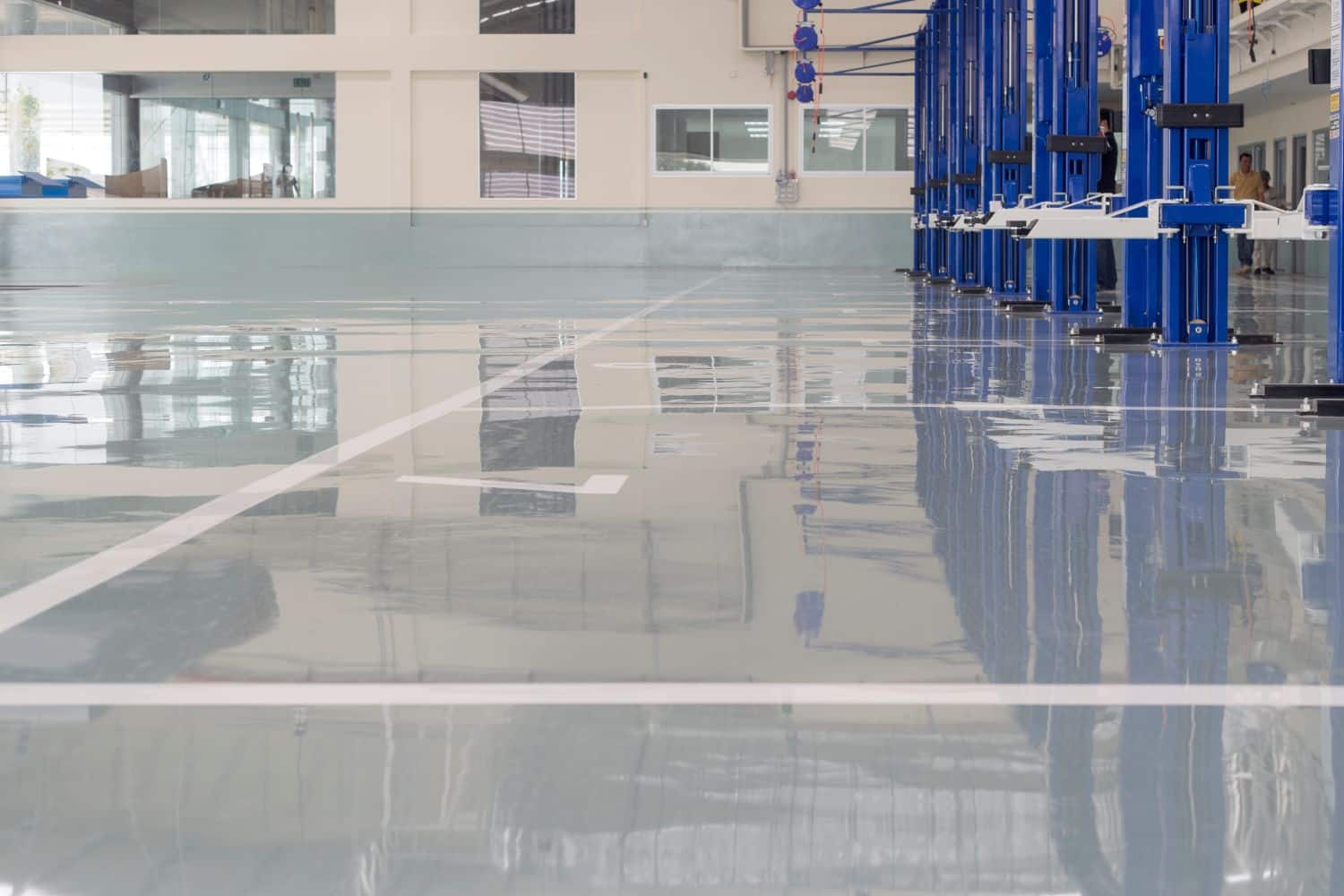
Anti-slip flooring (you’ll also hear it called non-slip flooring) has one job: keeping people on their feet when the floor gets wet, greasy or dusty. Resin is very good at it. The grip comes from graded aggregate locked into the resin itself, so it won’t peel up like tape or wear off like a coat of paint.
It matters more than most people realise. According to HSE’s injury statistics, slips, trips and falls on the same level caused 30% of the non-fatal injuries employers reported in 2024/25, more than any other cause, and most slips happen on floors that are wet or contaminated.
No two parts of a site need quite the same grip, so we start by working out what each area of your floor actually needs. That might be a light texture in a dry walkway and something much coarser on a loading ramp.
The Benefits of Anti-Slip Resin Flooring
There’s more than one way to make a floor less slippery, and resin isn’t always the answer. Here’s how it compares with the usual alternatives.
- Anti-slip paint is cheap and quick, but it’s a thin film. Under forklifts and pallet trucks it wears through fast, and the grip goes with it.
- Anti-slip tape and mats are fine as a stopgap. Edges lift, dirt collects underneath, and a curled-up mat is a trip hazard in its own right.
- Safety vinyl works well in offices, schools and healthcare. It’s less at home with heavy wheeled traffic, hot water and harsh chemicals, and if a welded seam splits, water gets underneath.
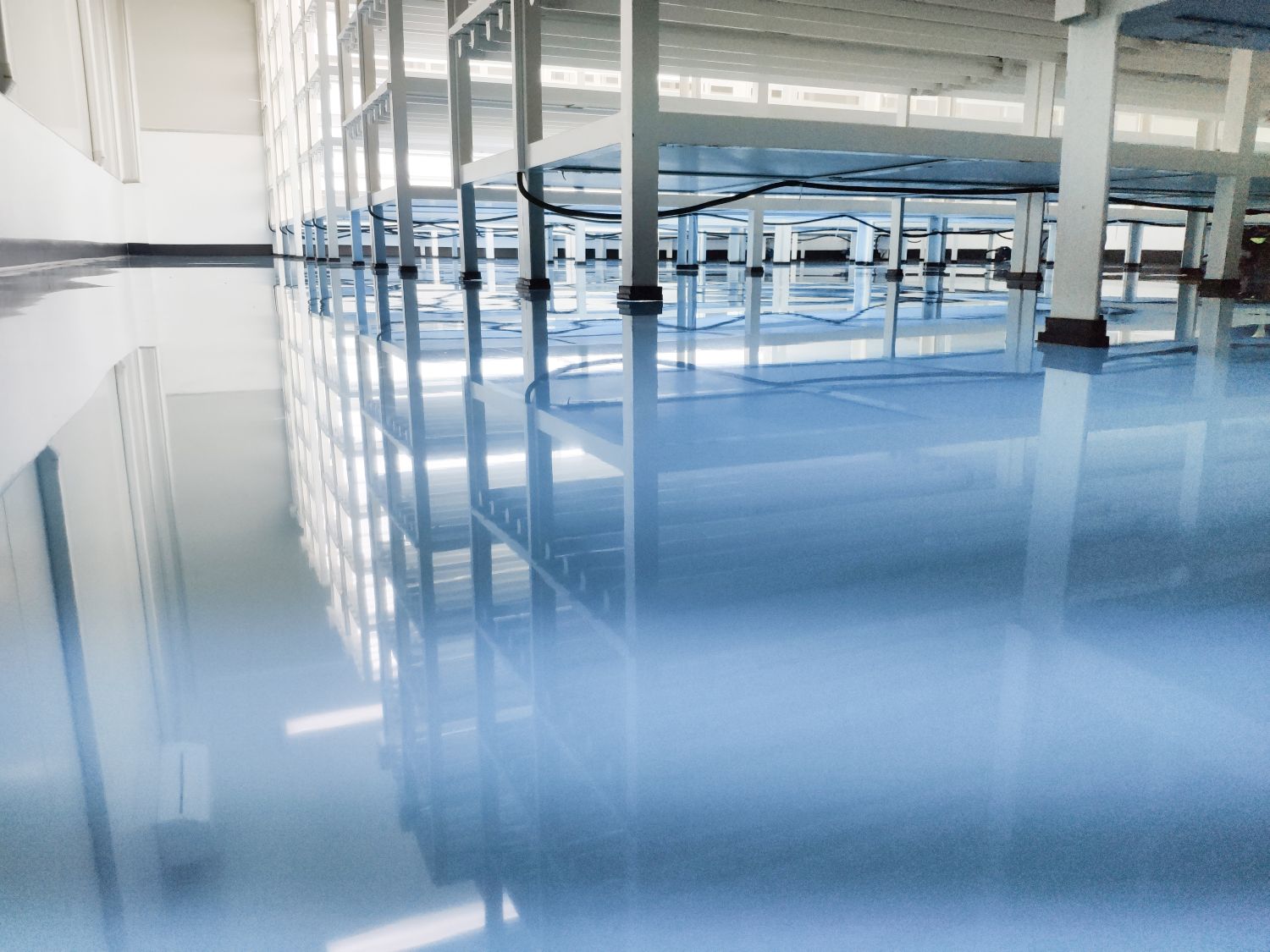
- Resin bonds to the concrete and forms one continuous surface, with no joints to lift or trap dirt. It copes with oils, chemicals and heavy traffic, and in screed systems the aggregate runs right through the material, so the floor keeps its texture as it wears.

Floor Slip Ratings Explained
In the UK, slip resistance is measured with the pendulum test (BS 7976). A swinging arm with a rubber slider, designed to behave like a shoe heel, sweeps across the floor and gives a Pendulum Test Value, or PTV. HSE uses three bands:
- 0 to 24: high slip potential
- 25 to 35: moderate slip potential
- 36 and above: low slip potential
The figure that matters is the wet one. Almost any floor feels grippy when it’s clean and dry, so for most working areas we aim for a wet PTV of 36 or more. Ramps need a higher figure, because the steeper the slope, the more grip it takes to stay upright.
You may also see two other measures. Surface roughness (Rz) is a quick check with a handheld meter: above 20 microns generally means low slip potential when the floor is wet with water, although oils and fats need a rougher surface. R-ratings, from R9 to R13, come from a German lab test (DIN 51130) in which someone in safety boots walks on an oily ramp that’s gradually tilted until they slip. Manufacturers quote them a lot, but HSE’s preferred method is the pendulum, because it can be used on the finished floor.
If your insurer or safety team needs evidence, we can arrange independent pendulum testing once the floor is laid.
Types of Anti-Slip Resin Flooring
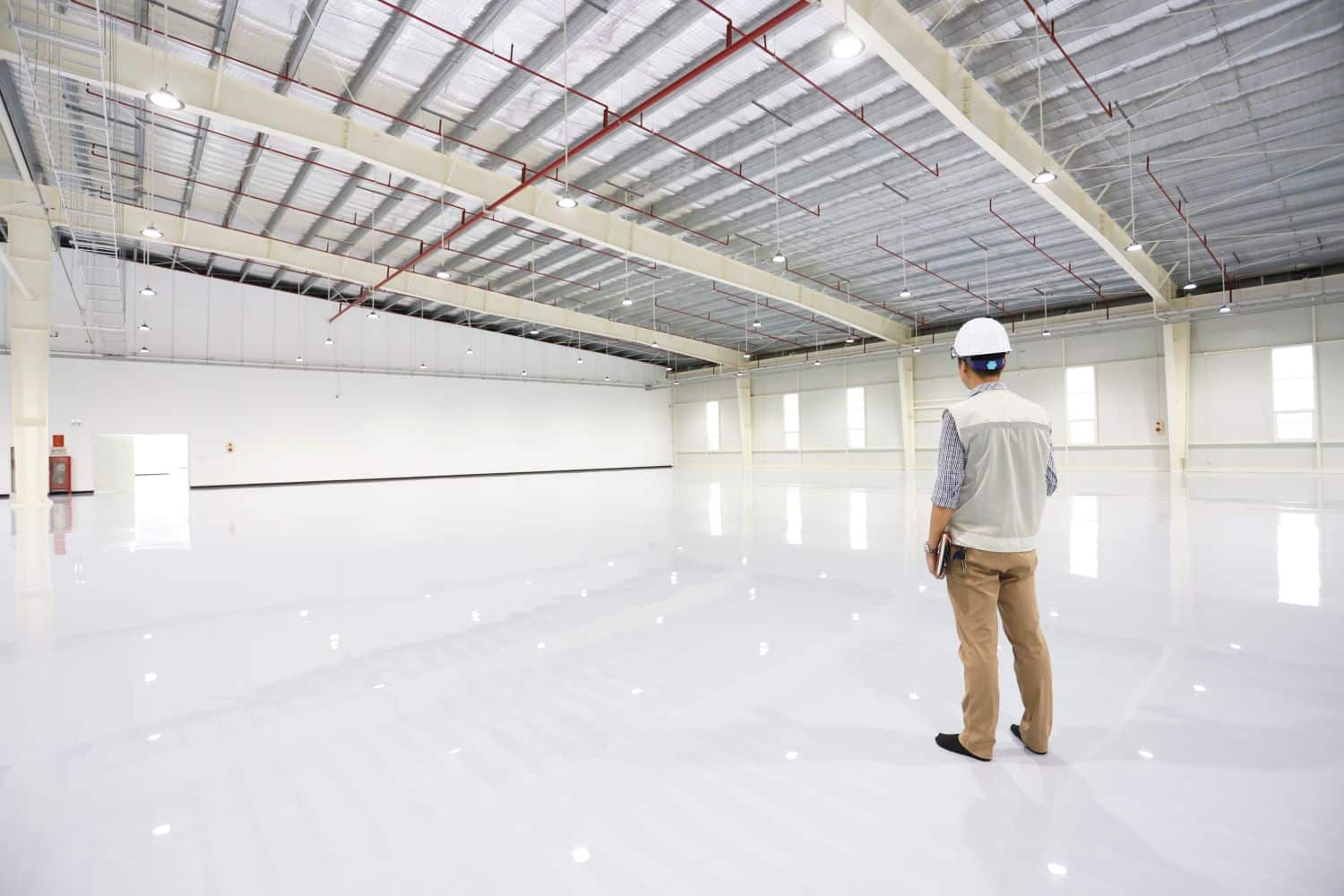
The right system depends on what ends up on the floor, what drives over it and how it gets cleaned. These are the main options.
- Textured coatings: a thin, roller-applied coating of epoxy resin or polyurethane with fine aggregate mixed in. Good for dry or occasionally damp areas such as warehouse walkways and plant rooms.
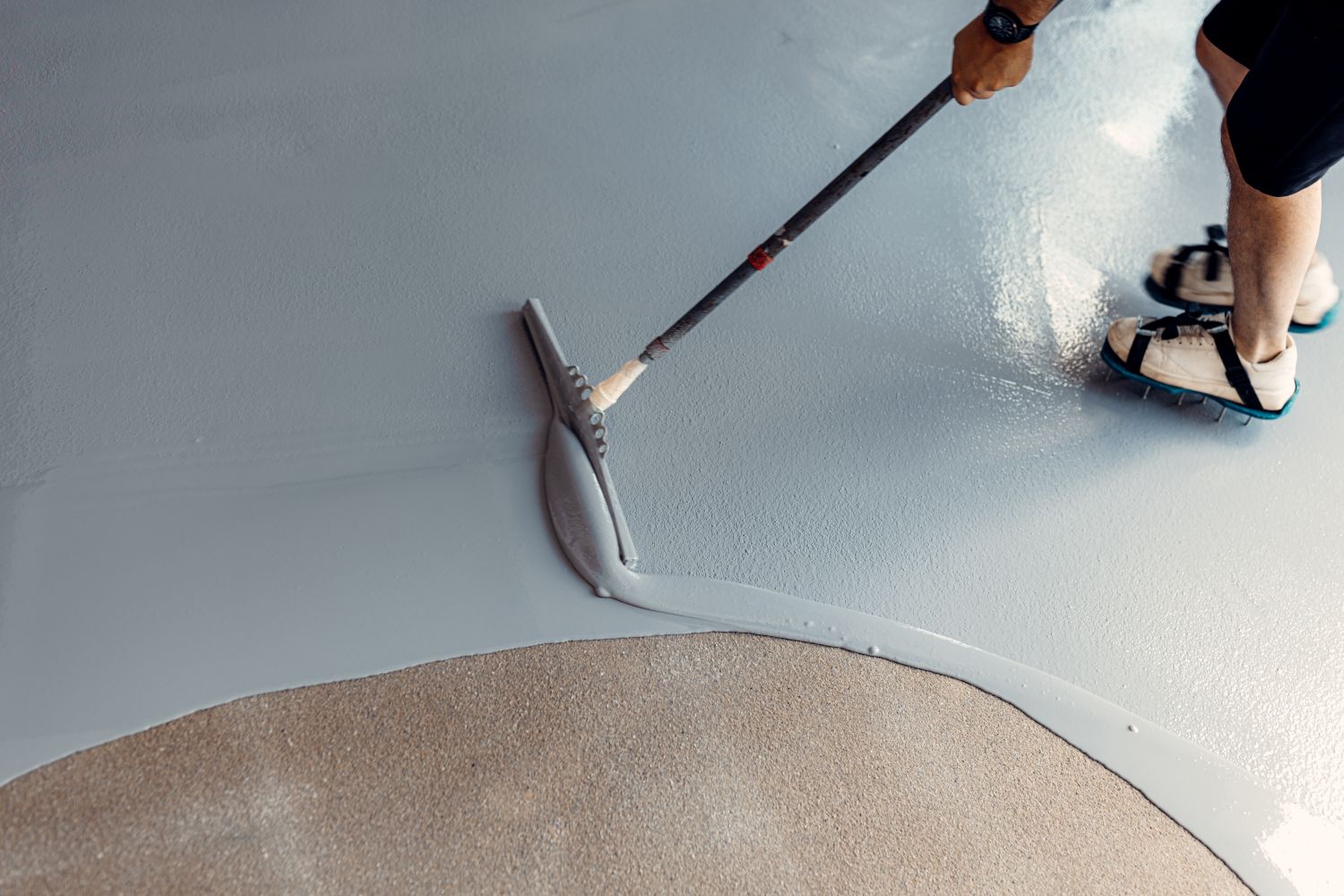
- Broadcast systems: aggregate is scattered into wet resin, then sealed with a topcoat. By changing the grade of aggregate and the thickness of the topcoat, we can set the texture anywhere from mild to aggressive, which makes this the most flexible option for production and wet areas.
- Polyurethane screeds: heavy-duty polyurethane resin flooring, trowelled several millimetres thick, with texture through the full depth. Made for kitchens and food production, where floors face hot water, steam cleaning, fats and heavy trolleys.
- Fast-cure MMA: acrylic (MMA) resin with anti-slip aggregate, back in use within a couple of hours. The one to choose when you can only close for a night.
- Ramp and external systems: harder, coarser aggregates such as calcined bauxite, used on ramps, loading bays and outdoor resin floors where rain, tyres and fuel spills all play a part.
If you need to control static as well, take a look at our anti-static resin flooring.

Rely on Resin Flooring Experts
When it comes to anti-slip resin flooring, experience and accreditations matter. With over 40 years in the industry, we’ve built a reputation for delivering precision, performance, and peace of mind. As members of the Resin Flooring Association (FeRFA), we follow best practice standards and stay ahead of evolving industry demands. We’re also licensed to install a wide range of premium resin systems, including Ucrete – a market-leading material that can only be applied by certified professionals. This means you’re working with a team that’s trusted by manufacturers and backed by industry bodies, delivering flooring solutions that are safe, robust, and built to last.

Fast and Flawless Installation
Our anti-slip resin flooring installations are carried out with speed, accuracy, and minimal disruption to your operations. From the moment we assess your space to the final finish, every stage is handled by our skilled in-house team. We plan meticulously, use specialist tools, and apply proven methods to ensure your flooring is installed quickly, without cutting corners.
For projects that require a new base, we can also carry out concrete works ourselves, eliminating the need for subcontractors and avoiding unnecessary delays. By keeping every part of the process under one roof, we provide a smooth, professional service and a long-lasting finish you can rely on.
Begin Your Resin Flooring Project Today
Enhance safety and durability with anti-slip resin flooring designed for high-performance spaces. Our expert team is ready to deliver a fast, professional installation. Contact us today for your free, no-obligation quote.